Exceptional Services Tailored to Your Fire Safety Requirements
Partner With Us To Build a Safer Business
Giving you the clarity to act, not just comply.
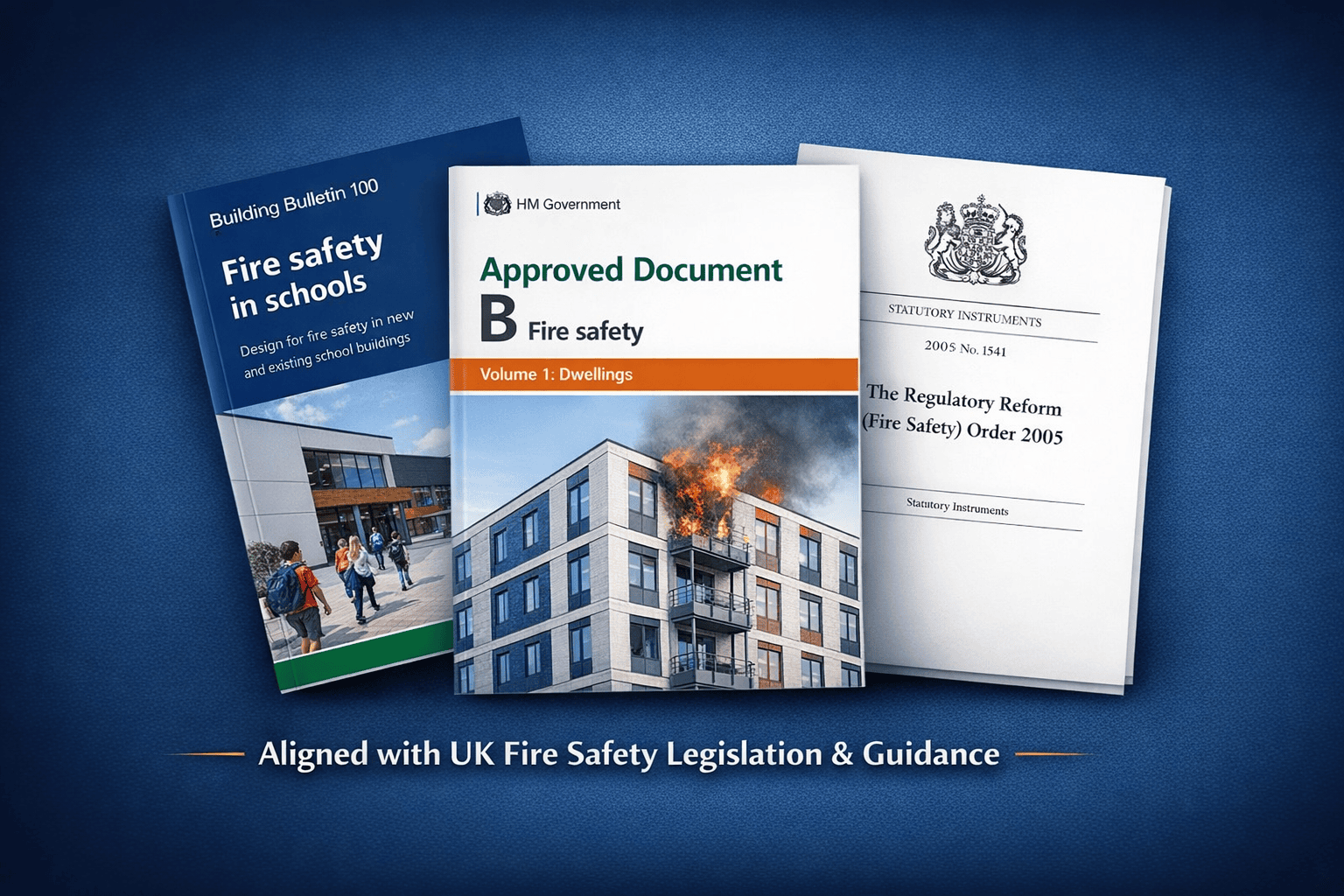
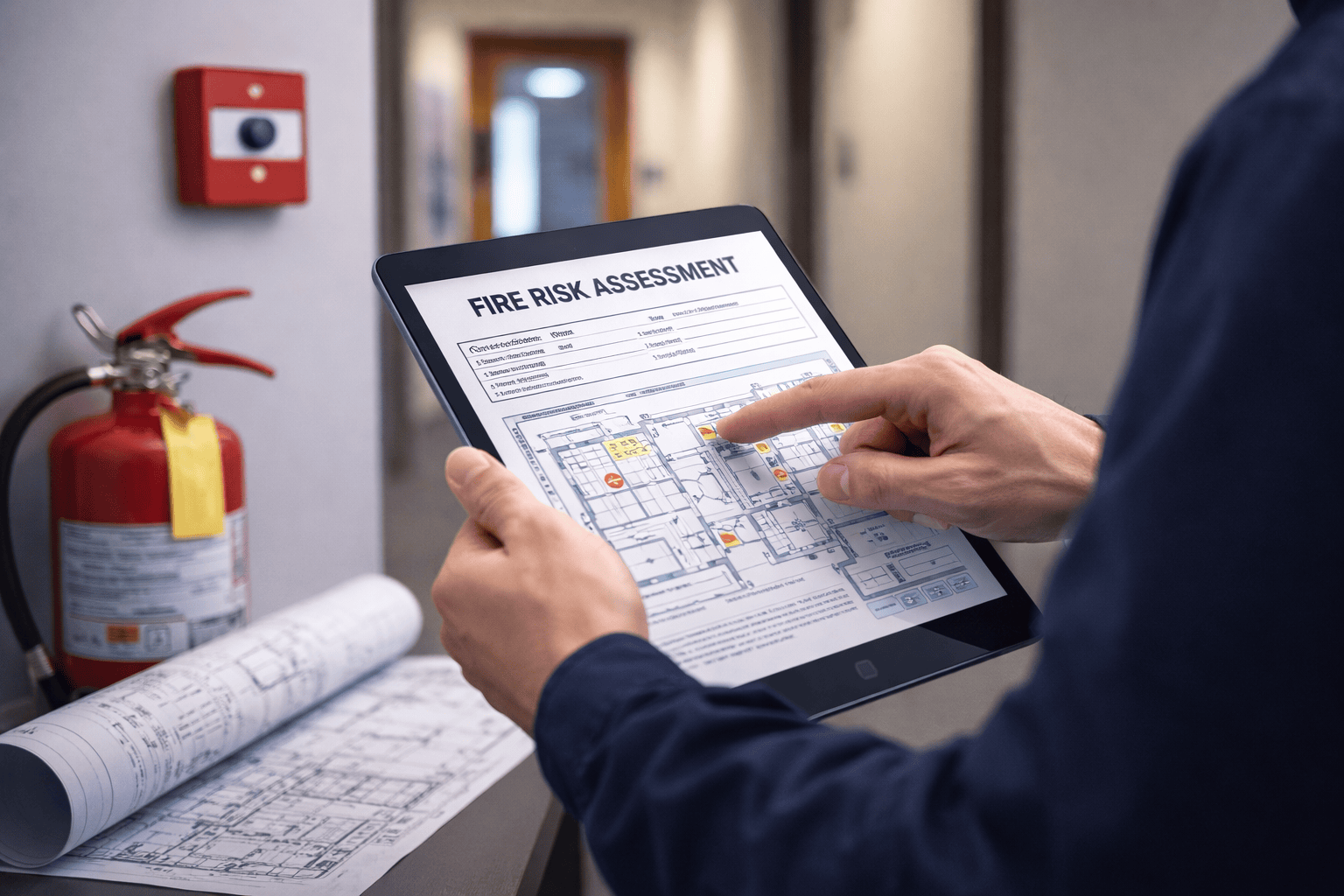
Our fire risk assessments are designed to provide a clear, proportionate understanding of fire risk within your premises, aligned with the requirements of the Regulatory Reform (Fire Safety) Order 2005.
For residential buildings, we undertake Type 1 and Type 3 fire risk assessments in accordance with Fire Safety in Purpose-Built Blocks of Flats guidance. Type 1 assessments focus on the common parts of the building and the overall fire strategy, while Type 3 assessments extend into a sample of flats to assess the condition and suitability of fire doors and the level of fire separation between dwellings and common areas.
For commercial premises, we carry out non-intrusive fire risk assessments, assessing the building, its use, and fire safety arrangements without destructive inspection. This approach ensures compliance can be demonstrated while remaining proportionate to the level of risk and disruption to operations.
Across all assessments, we go beyond a purely procedural approach, considering how fire could realistically develop and impact occupants. Our reports provide clear, prioritised, and actionable recommendations that support both compliance and the practical management of fire risk.
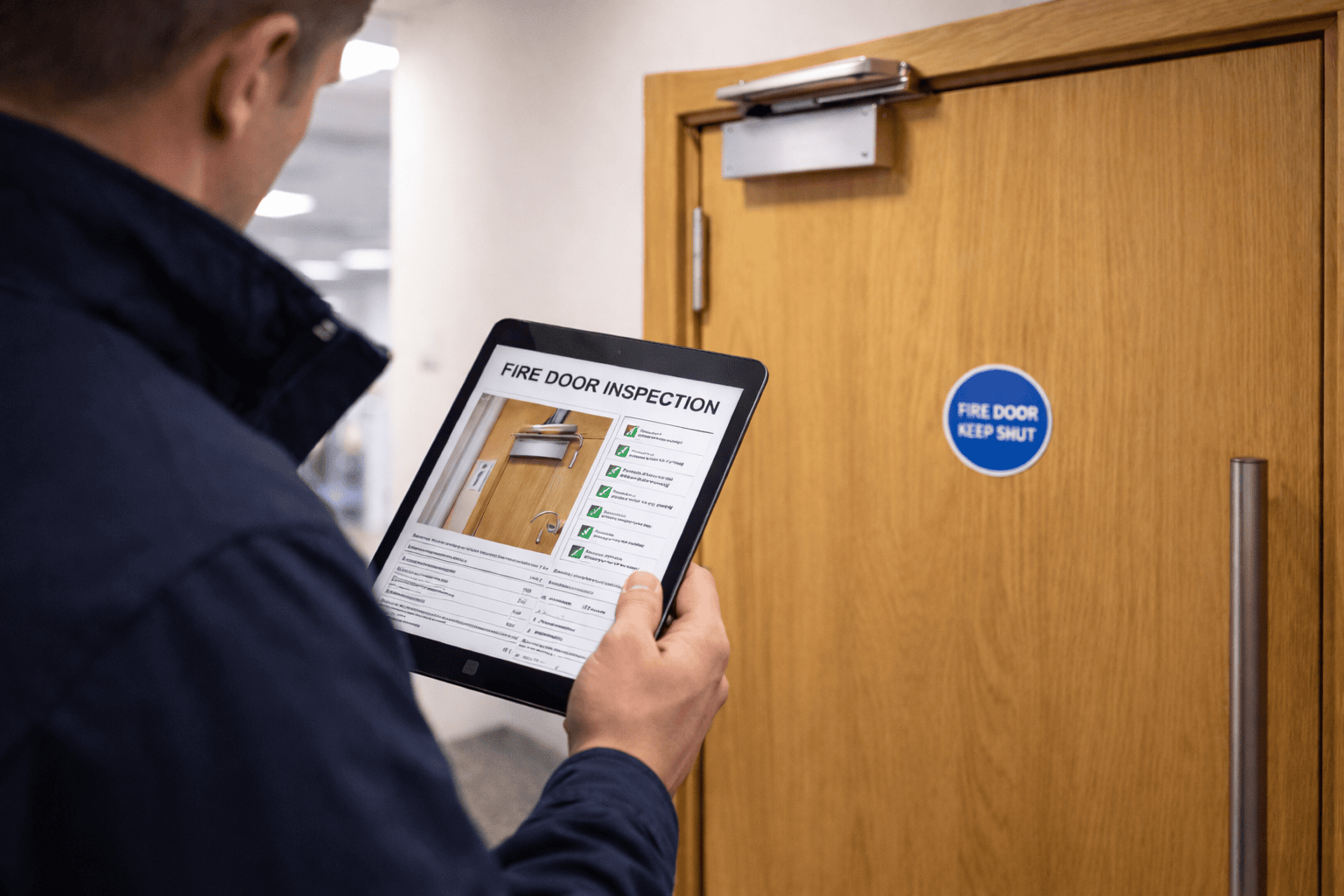
Fire Door Inspections (FDI)
Fire doors are a critical element of any building’s passive fire protection strategy, yet are often overlooked or poorly maintained. Our inspections assess doorsets and assemblies against relevant standards, including BS 8214 and industry best practice, identifying defects that could compromise performance in a fire situation.
We provide clear, evidence-based reporting that distinguishes between minor defects and issues that materially affect fire resistance or smoke control. Our approach ensures that remedial works are targeted, proportionate, and aligned with the building’s overall fire strategy, avoiding unnecessary replacement while maintaining life safety.
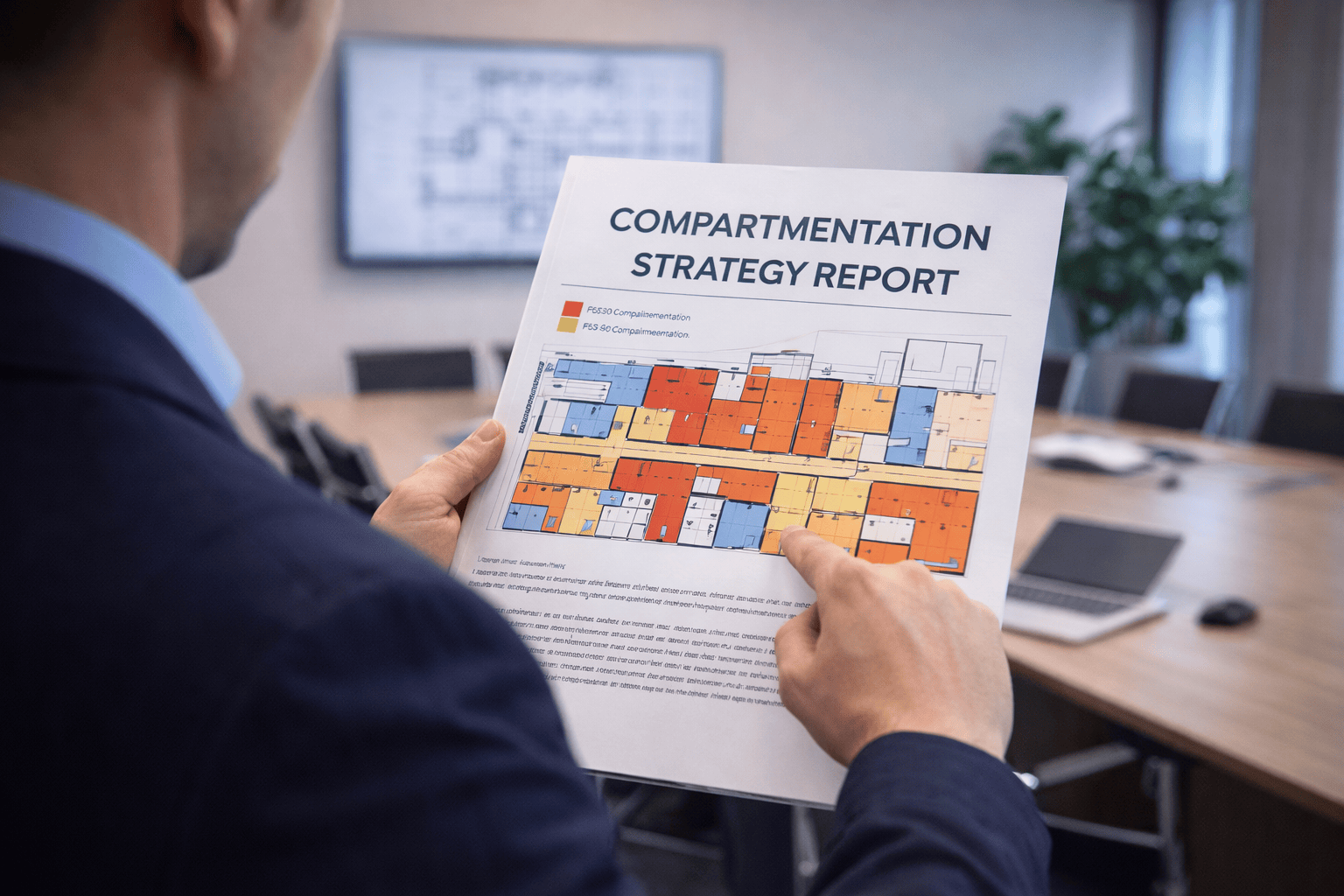
Compartmentation Strategy Reports (CDR)
Understanding how a building is intended to resist the spread of fire is fundamental to effective fire safety management. Our compartmentation strategy (determination) reports establish the required fire-resisting lines and performance standards based on the building’s use, layout, and risk profile, taking into account relevant statutory guidance, British Standards, and sector-specific considerations where applicable.
This service is particularly valuable where the original fire strategy is unavailable, incomplete, or no longer reflective of the building as it exists today. In these situations, there is often uncertainty around which elements are required to provide fire resistance and to what standard, which can impact the effectiveness of inspections, maintenance, and ongoing compliance activities.
Our reports provide a clear, reasoned determination of compartment boundaries and associated fire resistance requirements, supported by marked-up drawings and concise justification. This ensures that subsequent works and inspections—such as fire door surveys and compartmentation assessments—are based on a defined and defensible approach.
The outcome is a practical and proportionate solution that bridges the gap between limited or unclear information and the need for a structured fire strategy, providing clarity without unnecessary complexity or cost.

Fire Safety Consultancy
We provide high-level fire safety consultancy to support clients in managing complex or non-standard situations where straightforward guidance may not be sufficient. This includes advice on fire strategy, means of escape, risk-based decision making, and interpretation of legislation and guidance.
Our role is to provide clear, reasoned advice that balances compliance with practicality, enabling clients to make informed decisions without unnecessary disruption or cost. Whether supporting design development, resolving compliance challenges, or advising on enforcement matters, our input is grounded in both technical knowledge and real-world application.

Fire Stopping Inspections (FSI)
Fire stopping inspections focus on verifying that identified compartment lines are correctly maintained where services pass through walls and floors. These inspections assess whether fire-resisting construction has been appropriately reinstated following penetrations for mechanical, electrical, and plumbing services, ensuring that the intended level of fire resistance is preserved.
Our approach is targeted and informed by the agreed compartmentation strategy or available building information. We inspect known or designated fire-resisting elements—such as risers, service cupboards, and structural walls/floors—to confirm that firestopping systems are present, suitable, and installed in accordance with recognised good practice. This includes assessing the type of system used (e.g. batt and mastic, collars, wraps), the quality of installation, and the overall integrity of the seal.
Where deficiencies are identified, we provide clear, actionable recommendations, prioritised according to risk and aligned with relevant UK legislation and guidance. Our reporting avoids unnecessary complexity, focusing instead on practical outcomes—helping Responsible Persons understand what is required, why it matters, and how to achieve compliance.
This service is particularly valuable where there is an existing understanding of compartment lines but limited assurance that penetrations have been adequately fire stopped, or where ongoing works may have compromised previously compliant construction.

Fire Alarm & Detection System Audits
Our fire alarm audits provide an independent, technical review of fire detection and alarm systems, focusing on design suitability, system performance, and compliance with BS 5839. This is not a maintenance inspection, but a detailed assessment of whether the system is appropriate for the building and its risk profile.
We assess coverage, zoning, audibility, and system category against the building’s fire strategy, identifying gaps that may not be apparent through routine servicing. The outcome is a clear understanding of whether the system provides adequate life safety and where improvements may be required.
Responsible Person Advisory Service
We support Responsible Persons in understanding and discharging their legal duties under fire safety legislation. This includes ongoing advice, review of existing arrangements, and guidance on implementing practical fire safety management systems.
Our approach is collaborative and proportionate, helping clients move beyond a reactive or “tick-box” approach to compliance. By providing clear direction and ongoing support, we enable Responsible Persons to maintain confidence in their arrangements and respond effectively to change, inspection, or enforcement.
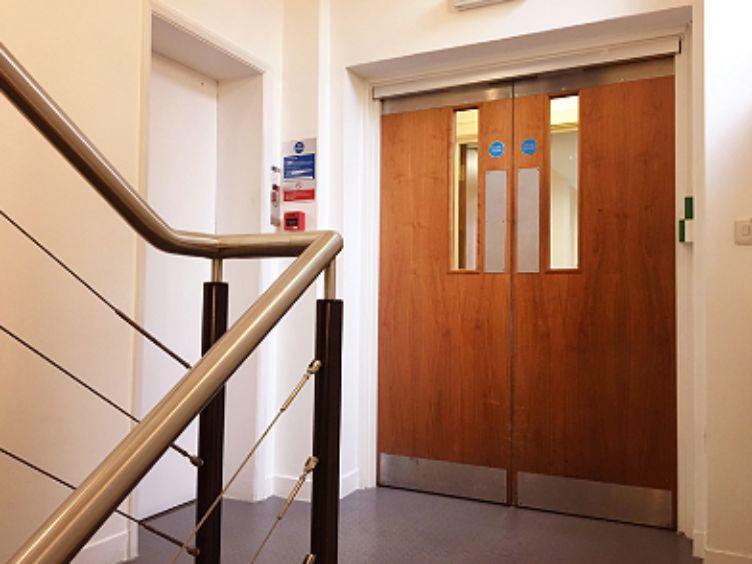
Means of Escape Assessments
A means of escape assessment evaluates whether occupants can safely and efficiently exit a building in the event of a fire. This includes consideration of escape routes, travel distances, exit provision, door operation, and the overall suitability of the layout in supporting a safe evacuation strategy.
Our assessments focus on how the building is actually used, rather than relying solely on theoretical compliance. We review the adequacy of escape routes in relation to occupancy type, fire risk, and management arrangements, identifying where layouts, obstructions, or poor design could compromise safe egress. This includes examining protected routes, final exits, inner rooms, dead ends, and the interface between different areas of risk.
Where issues are identified, we provide clear, proportionate recommendations aligned with UK legislation and relevant guidance. Our approach avoids unnecessary complexity, focusing instead on practical measures that improve life safety while remaining achievable for the Responsible Person.
This service is particularly valuable where there are concerns around layout changes, increased occupancy, or uncertainty as to whether existing escape arrangements remain suitable and compliant.